Unlocking the Mystery of Giling Basah (Wet-Hulling)
The Unique Heritage Behind Indonesia’s Signature Process
When coffee lovers explore Indonesian specialty coffee, one unique term inevitably comes up: Giling Basah, or wet-hulling. Unlike any other processing method in the global coffee industry, Giling Basah is deeply tied to the humid climate, culture, and traditions of Indonesian farming communities, particularly in Sumatra and Sulawesi.
What Makes Giling Basah Different?
In conventional coffee processing, such as washed or natural, coffee parchment is dried until it reaches a stable internal moisture content of approximately 10–12% before the protective parchment layer is milled off.
Why Do Farmers Use the Giling Basah Method?
The humid and rainy climate of Sumatra makes traditional slow drying difficult and increases the risk of mold damaging the coffee. Wet-hulling allows farmers to remove the protective parchment earlier, accelerating the drying process so the green beans can reach the market more quickly.
Flavor Profile & Best Brewing Methods
Cup Profile: Heavy, syrupy body, remarkably low acidity, and distinct rustic notes of dark chocolate, cedar, wet earth, tobacco, and spices.
Best For: Espresso blends, milk-based drinks such as lattes and cappuccinos, and immersion brewers like the French Press or Moka Pot.

Method of Giling Basah
Giling Basah follows these main stages:
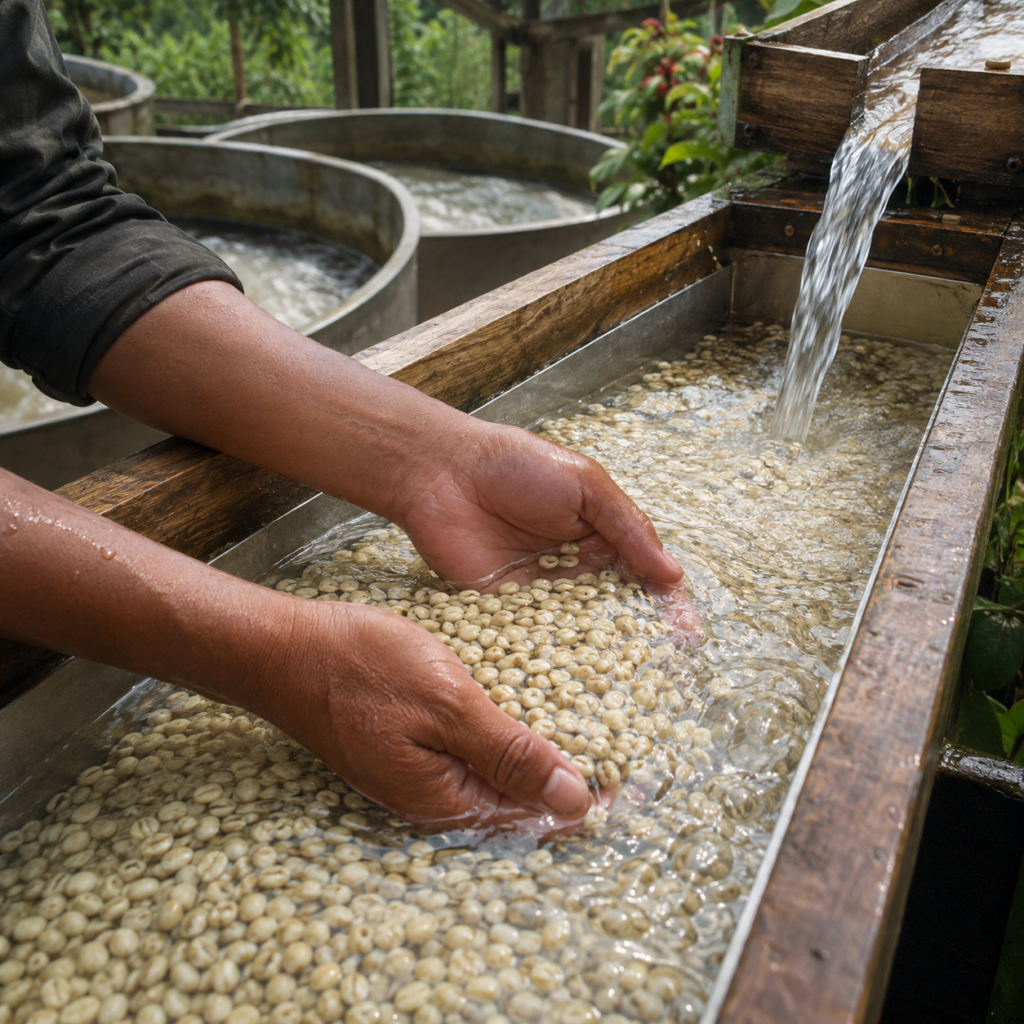
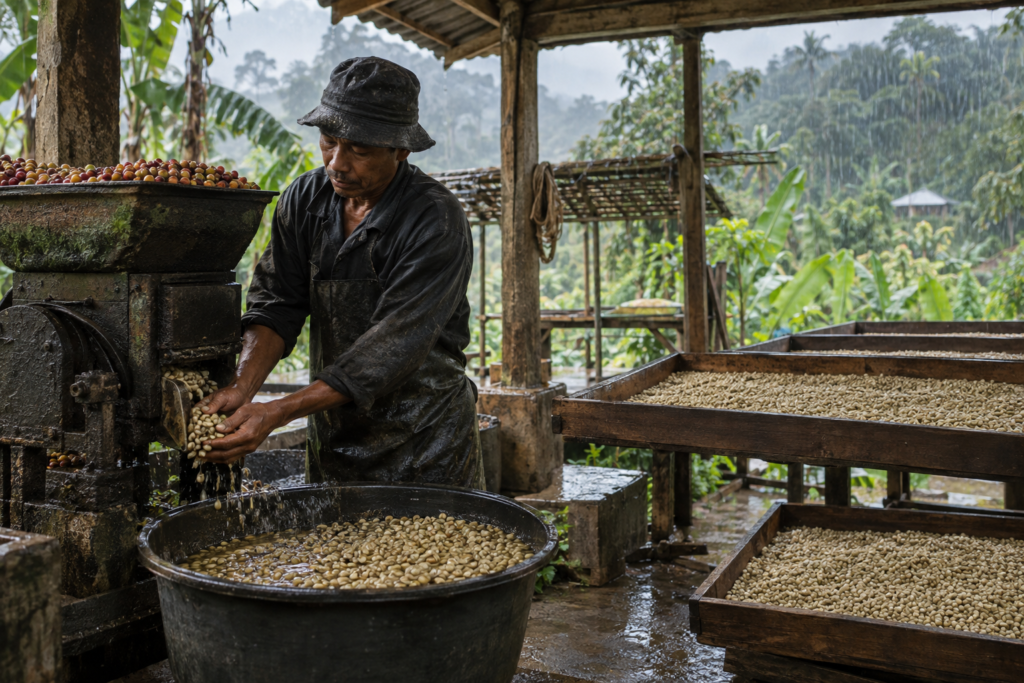
- Pulping: Farmers depulp the outer coffee cherry skin using mechanical pulpers shortly after harvesting.
- Short Fermentation: The sticky mucilage is broken down through a brief fermentation and washing process.
- Partial Drying: Instead of drying completely, the beans are dried inside their parchment until they reach a moisture level of approximately 30–35%.
- Wet-Hulling: The damp parchment is removed while the green bean is still wet and soft. The exposed pale-green beans, sometimes called labu or wet beans, are then spread out for secondary drying.
Additional Information:
Request Sample
Taste the difference of traditional wet-hulling. Claim your coffee sample today and experience our export-grade quality.
Chat UsWet Hulling at a Glance
A unique semi-washed process in which the parchment is removed while the coffee bean still has a high moisture content, resulting in lower acidity, a heavier body, and earthy, woody, or spicy notes. Main Origin: Widely practised in Sumatra, Indonesia, including Gayo and Lintong.