Sustainable Packaging Innovations
Protecting Green Beans Across Oceans
Storage Bag Matters
The Hidden Dangers of Maritime Coffee Transport
For coffee roasters and commercial buyers, the moment a bag of green coffee beans is opened is a moment of truth. You look for the uniform color, inhale the sweet, fresh aroma of the origin, and check for defects. But have you ever wondered what happens to those beans during their multi-week journey across the ocean? For an origin country like Indonesia—an archipelago spanning the equator with deeply humid tropical maritime routes—protecting green coffee from farm to roastery is both a massive scientific challenge and an art form.
Green coffee beans are hygroscopic, meaning they act like natural sponges. They actively absorb or release moisture and odors relative to their surrounding environment. When standard jute bags are loaded into steel shipping containers crossing tropical waters, they encounter extreme temperature fluctuations. This phenomenon creates container rain, where interior moisture condenses and drips onto the cargo. If green coffee absorbs excess humidity and its internal moisture exceeds safe thresholds, the risk of mold growth, fungal taints, and rapid degradation increases rapidly. Continued exposure to oxygen also causes delicate aromatic compounds to oxidize, fading the vibrant green beans into a pale yellow and stripping away their cupping integrity.
Locking in Freshness
To combat these maritime threats without relying on chemical pesticides, the modern specialty-coffee trade has widely adopted high-barrier hermetic packaging. Technologies pioneered by multilayer polymer liners, such as GrainPro and Ecotact, fit seamlessly inside standard export jute sacks to create an impermeable shield. These advanced liners are engineered with multiple distinct polymer layers that restrict oxygen and water-vapor transmission rates to near zero. By hermetically sealing the beans at origin—locking in an ideal moisture content between 10% and 11.5% and maintaining stable water activity—the internal ecosystem of the bag remains frozen in time throughout the voyage.
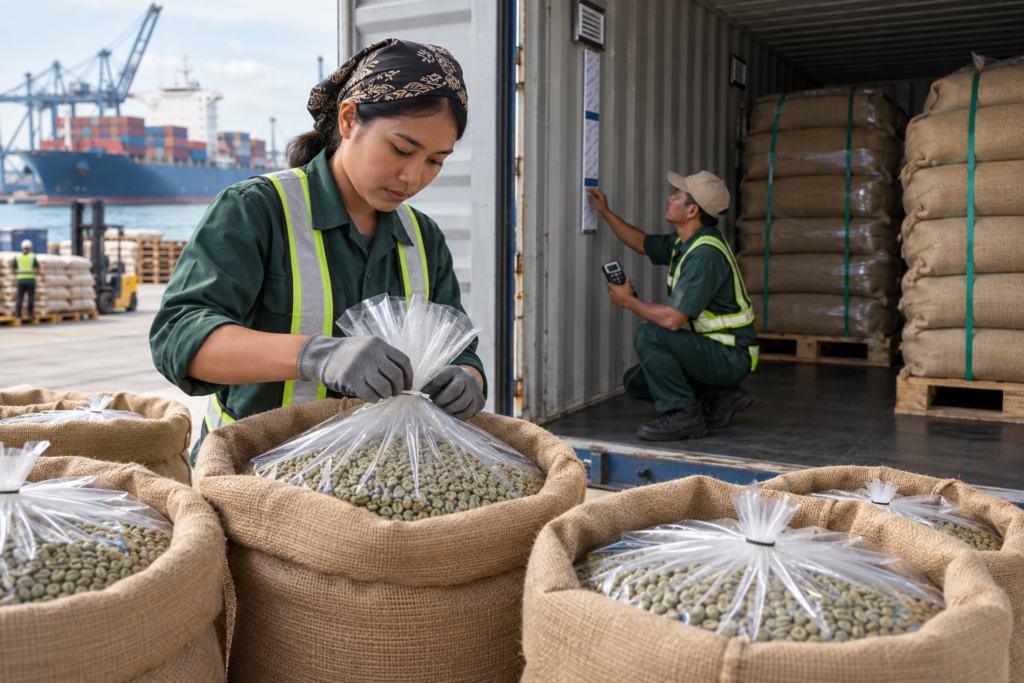
This packaging innovation plays a profound role in safeguarding the distinct character of Indonesian coffee, particularly traditional profiles processed through wet-hulling methods such as Giling Basah. Because Indonesian coffees possess a rich, heavy body and unique moisture dynamics, hermetic liners prevent ambient ocean humidity from altering the green beans. Whether shipping Sumatra Gayo, Java, Bali Kintamani, or Sulawesi Toraja, exporters pair these high-barrier liners with strategic container management, including calcium-chloride desiccant strips, to ensure regional flavor profiles arrive at international destinations tasting as fresh as the day they left the highland mills.
True packaging innovation must also respect the planet. Modern hermetic coffee liners are designed with sustainability at the forefront, constructed by leading manufacturers using eco-friendly polymers that are entirely recyclable after use. Beyond being fully recyclable, these high-grade liners are durable enough to be reused multiple times for local transport and warehousing, significantly reducing single-use plastic waste across the entire supply chain. By virtually eliminating the risk of cargo loss, mold damage, and spoilage during long transit routes, hermetic packaging ensures that the relentless hard work of Indonesian farmers is never wasted, successfully preserving valuable resources all the way from seed to cup.
Ready to Secure
Your Next Harvest?
Experience the unmatched quality, rich heritage, and authentic flavors of the Indonesian archipelago delivered safely to your port. Whether you are looking for single-origin Sumatra Gayo, Java, Bali Kintamani, or custom processing lots protected by advanced hermetic packaging, we are here to partner with your roastery.
Chat Us
Essential Rules
for Storing Green
Coffee Beans
Control the Climate
Keep your storage area cool and dry, far away from direct sunlight and extreme temperature changes.
Watch for Odors
Green coffee acts like a sponge, so never store it near chemicals, fresh paint, or strong spices that could ruin its flavor.
Keep It Off the Floor
Always store bags on pallets to allow air circulation and protect the beans from ground moisture.